From part five, the floor and the garden
Kneeling is fine. The paving slab under it is not
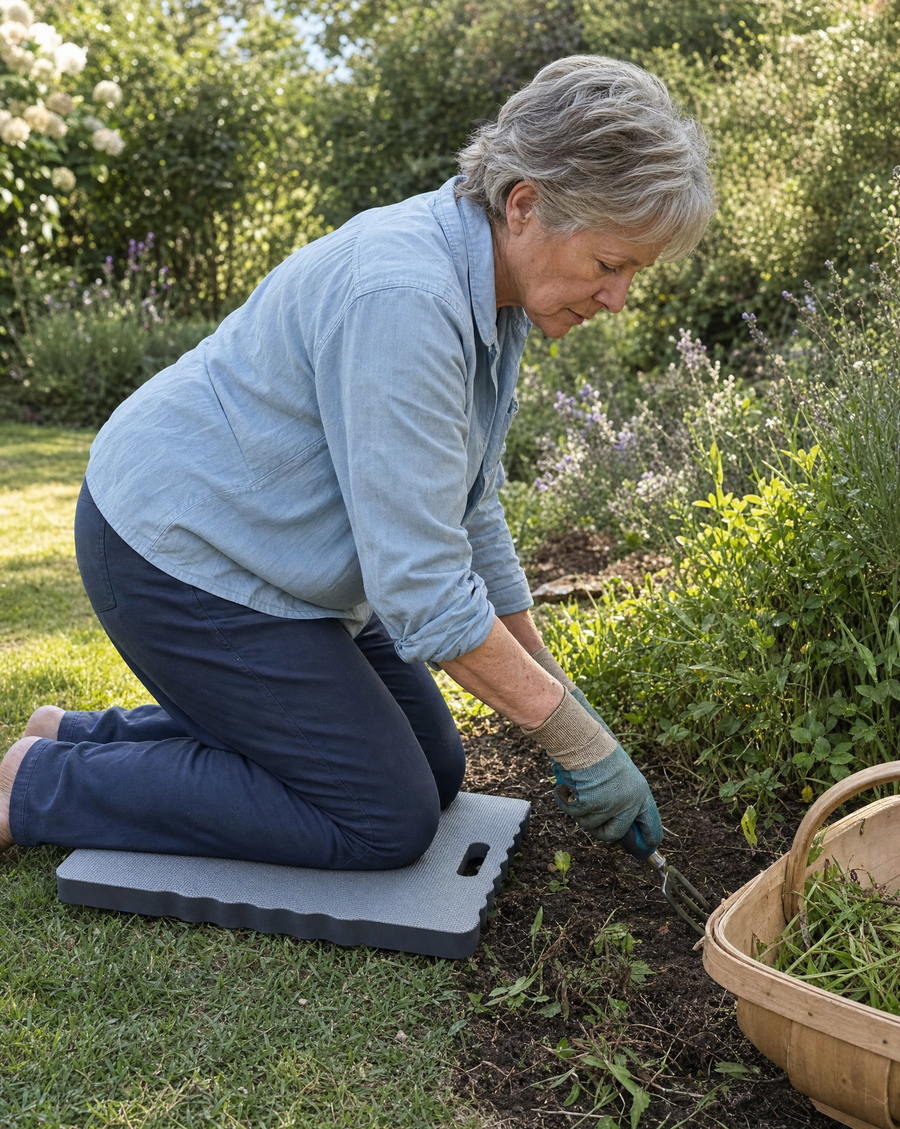
Part five spends a page on how to get down to the floor properly, the half kneel that a firefighter and a toddler both use, and then adds one line people skip. The pad matters. A folded towel, a cushion, a gardener's kneeler. A bare knee on a hard floor is unnecessary suffering, and it is what makes you decide, quietly and without ever saying it out loud, that you do not really do the borders any more.
This is about an inch and a half of molded EVA foam, 17.7 by 11 inches, with a handle cut through it so it hangs on a nail in the shed and comes to wherever the job is. Kneel, then pick it up and move it ten minutes later, which is the other thing part five asks of you.
- About an inch and a half of molded EVA foam, 17.7 by 11 inches
- Handle cut through the pad, so it carries in one hand and hangs up
- Closed cell foam, so it wipes down instead of soaking up the lawn
- Plain gray, with nothing printed on it
Free US shipping. Ninety days to send it back.
- Free US shipping
- 90 day guarantee
- US support
What it changes
It is a piece of foam. The reason it is on this site is the sentence in part five that says a bare knee on a hard floor is how people stop getting down to the floor at all.

The half kneel becomes worth doing
Part five has a four step way down to the floor that keeps you off both knees at once, guided by a hand on something solid. It works, and it still ends with a knee on the ground. Padding is the difference between doing it properly and avoiding the whole business.
It moves with the job
The garden rule in part five is to change position every ten minutes. Kneel, sit, stand at bench height, kneel again. A pad you can pick up with one hand is a pad you will actually move, and the moving is the point.
It is not only for the garden
The bottom cupboard, the lamp behind the sofa, the grandchild on the rug. Part five says being able to get down to the floor and back up is one of the things that keeps you living in your own house, and people rarely notice the day they lose it.
How to use it
The four step way down from part five, with the pad in the right place before you start.
- 1
Put it down before you go down
Set the pad where the knee is going to land, and stand next to something solid. A chair, a bed edge, a wall, the side of a raised bed.
- 2
One knee first, then the other
Step one foot back about a stride and lower the back knee onto the pad, with a hand on the support. Keep the front foot flat and the chest upright. Then bring the other knee down beside it.
- 3
Get up again after ten minutes
Hands on the raised thigh, push through the front heel. Then do something at bench height and come back to it. A knee that has knelt for ten minutes is stiff. A knee that has knelt for forty is an evening you will remember.
The specifics
- Size
- 17.7 by 11 inches, 45 by 28 cm
- Thickness
- About 1.6 inches, 4 cm
- Material
- Molded EVA foam, closed cell
- Color
- Gray
- Handle
- Cut through the pad itself
- Branding
- None
Questions
Is this the kneeler with the frames on the sides?
No, and our own book prefers that one for the garden. Part five says a kneeler with two side frames you can push up on is the single most useful object a gardener with stiff knees can own, because it turns a knee movement into an arm assisted one. This is the pad half. It is what goes under the knee, it folds into nothing, and it comes to the kitchen floor or the narrow border where a frame will not sit. If the push up frames are what you need, buy that kind and use this alongside it. We would rather say so than pretend.
Will it get soggy?
It is closed cell molded foam, not a fabric cushion, so it wipes down and it does not hold water the way a folded towel does after five minutes on wet grass. It is still foam, so bring it in for the winter rather than leaving it out in the rain.
Will it slide on a smooth floor?
On soil, grass, gravel and paving it stays where you put it. On polished boards or wet tile, set it against something solid rather than trusting it, which is what part five would tell you about any surface you are about to put weight on.
Is it thick enough for gravel?
An inch and a half is the usual thickness for this kind of pad, and it is the standard the US market sells. On gravel you will still know the gravel is there. If your knees are the reason you are reading this, kneel on the path or the grass beside the gravel and reach across.
Take it out to the border for a season
Ninety days. If you go back to the folded towel, send the pad back and we will refund it. Return postage is yours.